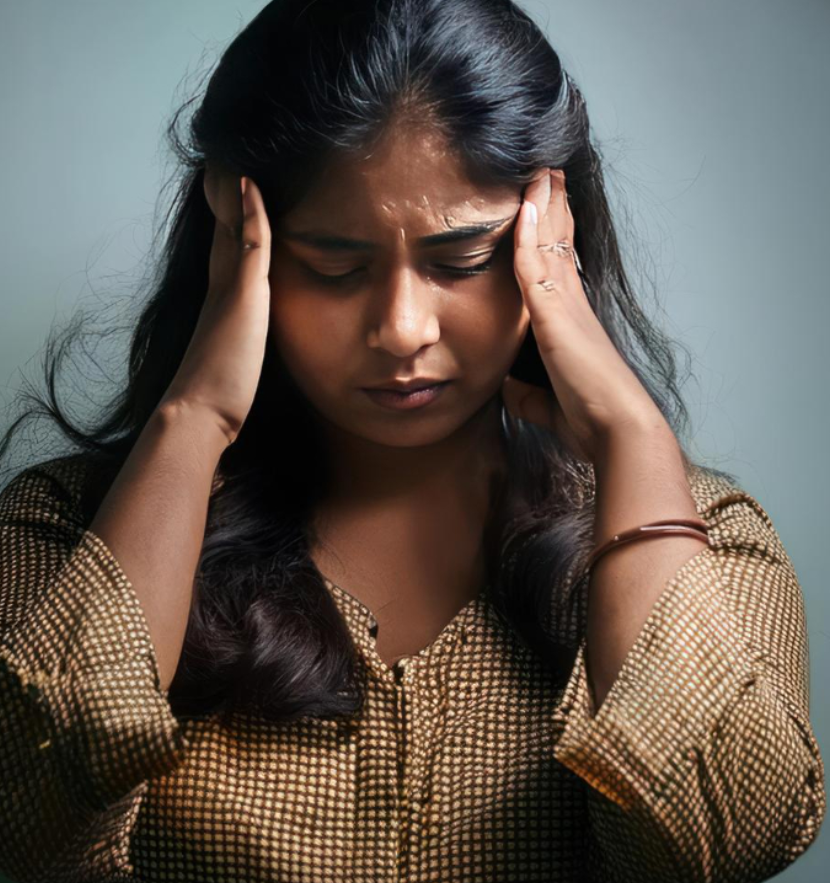
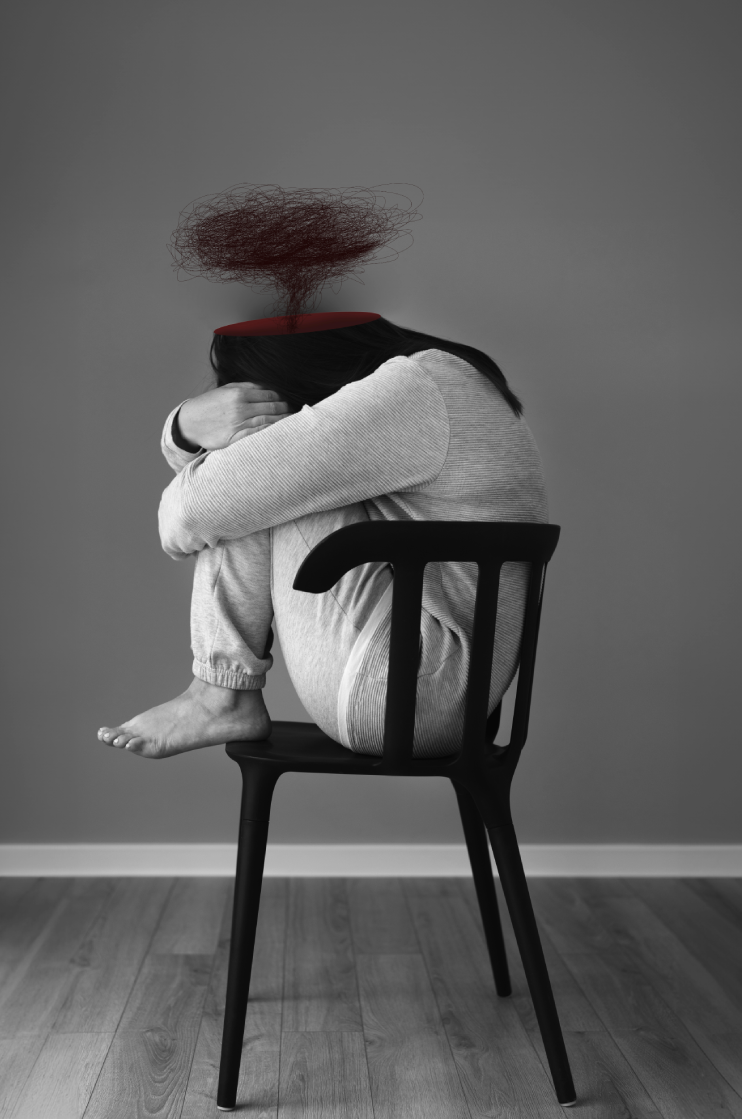
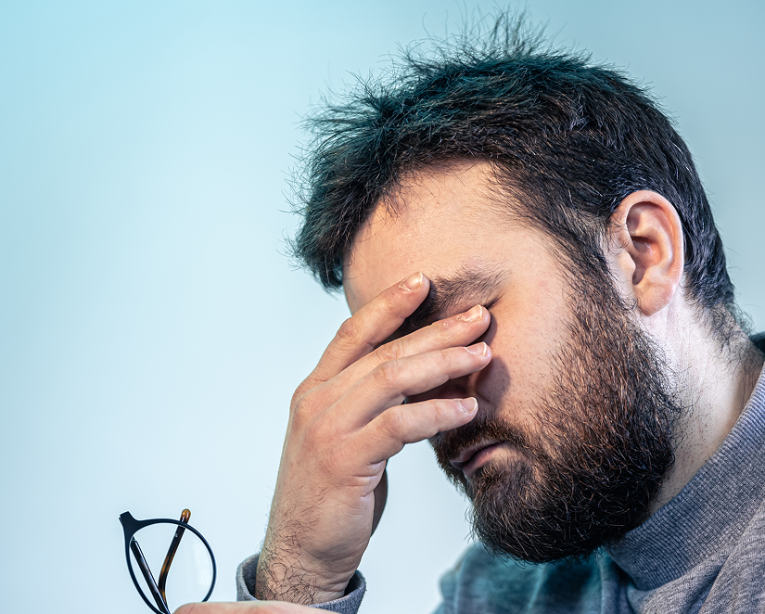
As per the American Psychological Association, anxiety is a feeling of worry or fear. It can make you feel that something bad is going to happen. In short bursts, it protects you by sharpening your focus before a presentation. Also, alerting you to genuine danger. A phone call, a social gathering, a thought about the future, anxiety stops being useful and starts becoming the problem.
Do you feel anxious or on edge most days?
Do you overthink even small decisions?
Do you struggle to relax or "switch off"?
Is it affecting your sleep or productivity?
Many people live with anxiety for years before seeking help. They often dismiss it as 'overthinking' or 'just being a worrier.' But anxiety is not a personality flaw or a lack of willpower. It is a recognised psychological condition with clear and effective treatments. It responds very well to therapy.
If worry, fear, or a persistent sense of unease is shaping your decisions. If it is limiting your life or exhausting you daily. You are in the right place.
Anxiety shows up differently for different people. Some experience it primarily in the body; others feel it most in their thoughts or behaviour. Common signs include
A racing or pounding heart, even when you are not exerting yourself.
Muscle tension or a general sense of being "on edge."
Sweating or hot flushes in situations that are not physically demanding.
Shortness of breath or a feeling of tightness in the chest.
Dizziness or an unsettled stomach.
Difficulty sleeping, either falling asleep or staying asleep because your mind will not quieten.
In case of an emergency, you can always reach out to 24/7 crisis helplines.
Persistent, hard-to-control worry about everyday matters such as work, health, family, and the future.
A sense of impending doom or dread that you cannot quite attach to a specific cause.
Difficulty concentrating because your mind is occupied with what could go wrong.
Irritability that feels disproportionate to the situation.
Fear of losing control or feeling that something terrible may happen.
In case of an emergency, you can always reach out to 24/7 crisis helplines.
Avoiding situations or places that trigger anxiety, even when you know the avoidance is limiting you.
Seeking reassurance repeatedly from others without it bringing lasting relief.
Procrastinating or freezing on decisions because the uncertainty feels unbearable.
Checking and rechecking your phone or locks to manage anxiety temporarily.
Withdrawing from social situations to avoid the discomfort they bring.
In case of an emergency, you can always reach out to 24/7 crisis helplines.
If several of these feel familiar, it is worth talking to a professional. This is not because something is seriously wrong with you. The reason is that you deserve to live without this level of internal noise.
Everyone feels anxious sometimes. The line into clinical anxiety is crossed when:
The anxiety is persistent. It has been present most days for six weeks or more.
It is excessive relative to the actual risk or situation involved.
It is difficult or impossible to control, even when you try.
It is interfering with your work, relationships, or ability to enjoy daily life.
You are organising your life around avoiding triggers. The avoidance is getting wider.
You are experiencing panic attacks. The sudden surges of intense fear with physical symptoms.
Anxiety disorders are the most prevalent mental health conditions globally. In India, studies suggest that anxiety affects nearly 45 million people. The good news is that, with the right therapeutic approach, most people see significant, lasting improvement.
Anxiety rarely has a single cause. It is usually the result of a combination of life experiences, thought patterns, and circumstances. Understanding the roots of your anxiety is one of the most important things we do in therapy. Treating the surface symptoms without addressing what feeds them only provides temporary relief.
When stress is sustained over time, the nervous system can become stuck in a state of high alert. What begins as stress gradually becomes anxiety.
This is particularly common in Delhi, where high-stakes professional culture and long working hours create fertile ground for anxiety disorders. We help clients distinguish between situational anxiety that needs practical strategies and deeper anxiety patterns that require therapeutic work.
Anxiety is frequently rooted in past experiences. These are particularly those that felt dangerous or beyond your control.
Childhood adversity or a difficult relationship. Sometimes, an accident, a bereavement, or a period of prolonged instability can all leave the nervous system in a state of learned vigilance. Even when the threat has long passed, the brain continues to scan for danger. This type of anxiety often does not respond fully to CBT alone and may benefit from trauma-informed approaches.
Social anxiety is more than shyness. It involves an intense fear of being judged or humiliated in social situations. It can be profoundly limiting.
Presentations at work or sometimes eating in front of others. Each of these can feel genuinely threatening. Social anxiety is one of the most responsive conditions to targeted therapy. With the right approach, most people experience dramatic and lasting improvement.
Health anxiety, which was previously called hypochondria. It involves persistent, disproportionate worry about having or developing a serious illness.
It is extremely distressing and often misunderstood. Health anxiety can also develop in response to a real diagnosis. The uncertainty of living with chronic illness creates its own particular kind of anxiety that deserves specialist support.
The human brain is wired to find uncertainty uncomfortable. Major transitions include a new job, a move, the end of a relationship, parenthood, retirement, or the loss of someone important.
This all disrupts our sense of predictability and safety. For some people, this tips into an anxiety response that makes the transition far harder to navigate. Therapy during a period of transition helps you process the change. It also helps to manage the anxiety it triggers and builds a foundation for what comes next.
Anxiety is often learned. Growing up in a household where worry was the default response to uncertainty. Sometimes, when one parent modelled anxious behaviour, or when attachment was unpredictable can shape the nervous system in lasting ways.
Relationship dynamics in adulthood. An anxious attachment style. Sometimes, a volatile partnership, conflict avoidance, can also sustain and amplify anxiety.Understanding the relational roots of your anxiety is often a key part of treatment.
Book an online appointment for expert care anytime, anywhere.
Anxiety Is Not One Condition; It Is A Family Of Related Disorders. A Correct Understanding Of Which Type You Are Experiencing Shapes The Treatment Plan
Persistent, excessive worry about multiple areas of life (work, health, family, money) most days, for at least six months. The worry feels difficult or impossible to control.
Recurrent, unexpected panic attacks accompanied by intense physical symptoms (racing heart, chest tightness, dizziness, shortness of breath). Often accompanied by fear of having further attacks.
Intense fear of social or performance situations where scrutiny by others is possible. Leads to significant avoidance and distress.
Marked fear and avoidance of a specific object or situation (heights, flying, needles, animals). Disproportionate to the actual danger involved.
Excessive fear of separation from attachment figures. More common in children but present in adults too, often linked to relationships.
Fear and avoidance of situations where escape might be difficult or help unavailable during a panic attack. Can become severely limiting.
Disproportionate worry about having or developing a serious illness, with frequent body-checking or reassurance-seeking.
Many people experience features of more than one type. A thorough assessment at Kaleidoscope will give you clarity on what you are dealing with and the most effective path forward.
There is no single approach that works for everyone. At Kaleidoscope, your psychologist will begin with a thorough assessment of your anxiety. They will look at every detail and how it is currently affecting your life before recommending a treatment plan. That plan may draw on one or more of the following evidence-based approaches:
CBT is the gold standard, first-line treatment for most anxiety disorders. It is extensively researched and consistently effective. For anxiety, it works by targeting the two main engines that keep anxiety going: unhelpful thinking patterns and avoidance behaviour.
In practice, CBT sessions at Kaleidoscope are collaborative and practical. Between sessions, your psychologist will guide you through exercises that build insight and shift patterns over time.
ERP is a specialised form of CBT used primarily for OCD and specific phobias. It involves gradually and systematically confronting feared situations. While resisting the urge to perform the compulsions or avoidance behaviours that temporarily reduce anxiety.
ERP works by allowing anxiety to rise and naturally subside without the usual escape route. Over time, the brain learns that the feared outcome does not occur. Finally, the anxiety response weakens. It is one of the most powerful treatments in psychology.
ACT takes a different angle on anxiety. Rather than eliminating anxious thoughts, it helps you change your relationship with them. ACT teaches you to observe anxious thoughts without being controlled by them.
ACT is particularly effective for clients whose anxiety is tied to a deep need for certainty. It builds psychological flexibility. It is arguably the single most important predictor of long-term well-being.
MBCT combines the practical techniques of CBT with mindfulness-based practices drawn from the MBSR programme. It is particularly well-suited to clients who experience recurring waves of anxiety. It is for those whose anxiety is closely intertwined with low mood. MBCT helps break the automatic escalation from a single anxious thought into a full anxiety spiral.
The mindfulness skills practised in MBCT are one’s clients carry with them long after therapy ends. It is tools for life, not just for the duration of treatment
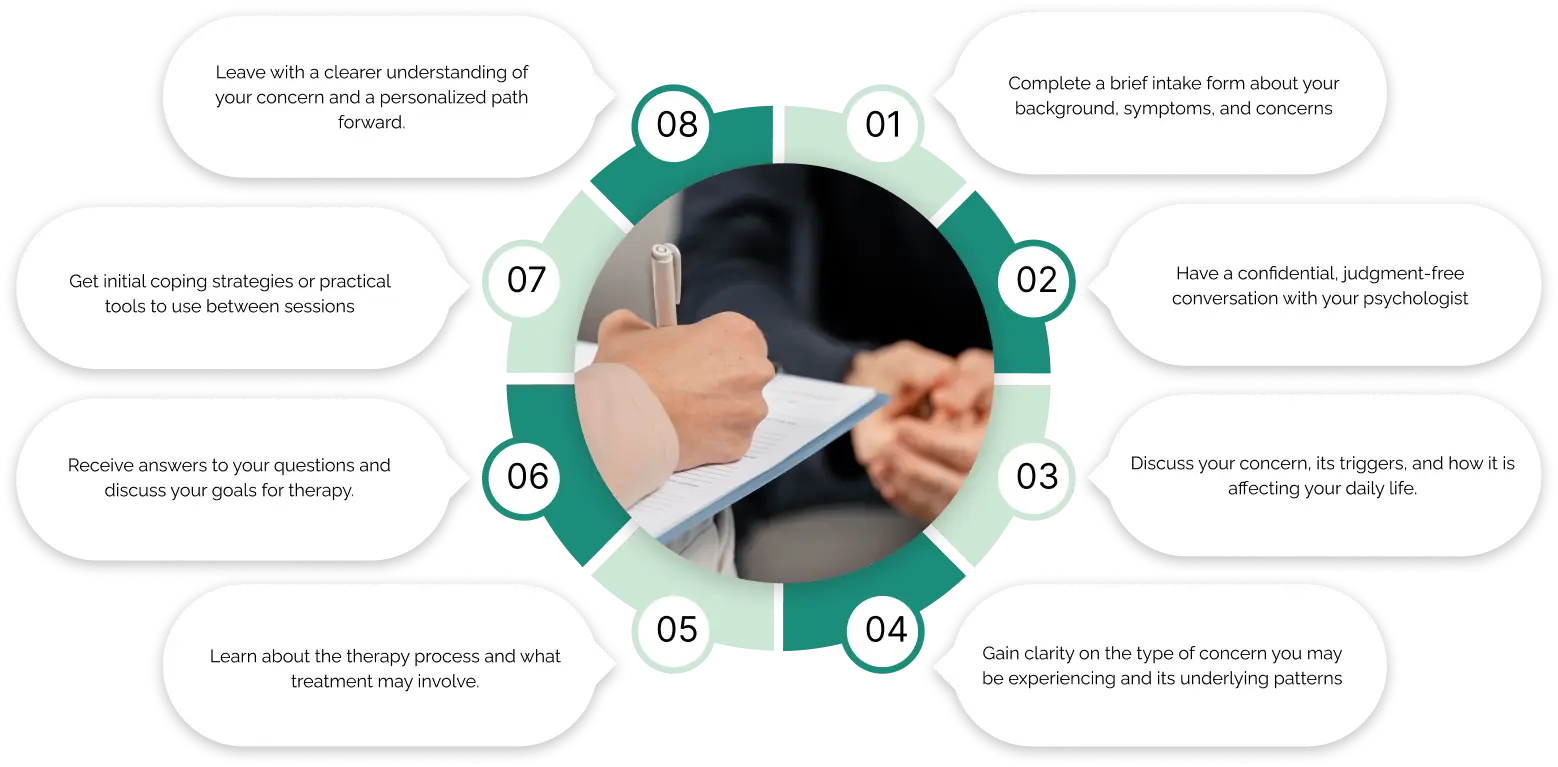
If you have never been to therapy before or if anxiety makes the idea of the first session feel daunting, here is exactly what to expect.

After the session, your anxiety disorder specialist may share some initial tools or psychoeducation to try before your next appointment. Progress with anxiety therapy is gradual and cumulative.
Both mode are clinically effective. Research consistently shows that online therapy produces outcomes equivalent to in-person therapy for anxiety disorders. The best format is simply the one that makes it easiest for you to show up consistently.
Healed people express themselves from their hearts.
Get Informed and Seek The Right Help In The Right Direction.
Students secretly suffer from anxiety, self-doubt, burnout, and emotional exhaustion owing to the feeling of not being ‘good enough’.
Screens are everywhere now. From online classes and cartoons to gaming and YouTube shorts.
A child psychologist is an expert in studying and assisting in the development of the emotional, behavioral, and cognitive growth of an individual.
Your concerns does not have to be the lens through which you experience everything. With the right support, you can understand what is driving it. It will help to loosen its hold on your decisions and relationships and reclaim a life that is not organised around avoidance and worry.