Home > Condition > OCD Therapy

Therapy for OCD in Delhi. Expert Counselling to Break the Cycle

OCD is more than being neat or organised. It involves distressing thoughts and repetitive behaviours that can take over daily life. Our psychologists at Kaleidoscope help you understand your condition, identify specific triggers, and learn effective strategies to break the cycle.

Book 10 Mins Free Consultation
Is OCD Controlling Your Thoughts and Behaviour?

According to the DSM-5 criteria of the American Psychiatric Association, OCD is characterised by the presence of obsessions — recurrent, intrusive, unwanted thoughts causing distress and/or compulsions — repetitive behaviours or mental acts performed to neutralize anxiety that are time-consuming and cause clinically significant impairment in functioning.

Do I Have OCD? (Quick Self-Assessment)

Do you experience unwanted, distressing thoughts or images that keep coming back despite your efforts to stop them?

Do you feel compelled to repeat certain actions or rituals to reduce anxiety or prevent something bad from happening?

Do your obsessions or compulsions take up more than an hour of your day?

Is it affecting your sleep, relationships, work, or ability to carry out daily tasks?

If you relate to two or more of these, your symptoms may need professional attention.

Everyone experiences unwanted or strange thoughts occasionally. With OCD, however, these thoughts feel distressing and difficult to ignore, and compulsions may seem like the only way to get temporary relief. If these patterns start interfering in your daily life, it is time to seek professional support.

Signs You May Be Experiencing OCD

OCD manifests differently in different people, but the underlying pattern remains the same. Here are some common ways it may present.

Persistent, unwanted, and distressing thoughts or mental images.

Fear of contamination, germs, or causing harm to others.

Doubts about whether tasks were completed safely (locks, appliances, switches).

Aggressive, taboo, or morally disturbing thoughts that feel alien and shameful.

A powerful need for symmetry, exactness, or things to feel "just right".

Religious or moral obsessions, also known as scrupulosity.

In case of an emergency, you can always reach out to 24/7 crisis helplines.

Excessive hand-washing, cleaning, or sanitising rituals.

Repeatedly checking locks, appliances, or doors.

Counting, ordering, or arranging objects in a specific way.

Seeking constant reassurance from others about fears or doubts.

Mental rituals such as silent prayers, repeating phrases, or thought neutralising.

Avoiding certain people, places, or situations that trigger obsessions.

In case of an emergency, you can always reach out to 24/7 crisis helplines.

Anxiety Help

When Does OCD Become A Problem That Needs Professional Help?

OCD warrants professional support when

Time-Consuming: Your Obsessions Or Compulsions Take Up More Than An Hour Each Day

Distressing: The Thoughts Cause Significant Anxiety, Shame, Or Dread

Interfering: OCD Is Affecting Your Work, Studies, Relationships, Or Daily Responsibilities

Escalating: Symptoms Are Becoming More Frequent, Intense, Or Expanding To New Areas

It is never too early or late to seek help. Gaining clarity about your experiences is the next positive step forward

What Is Causing Your OCD? Common Triggers We Treat

OCD does not have a single cause. It emerges from a combination of neurological, genetic, and environmental factors. Understanding the cause is the foundation for effective treatment.

Neurological and Genetic Factors

Research shows that OCD is associated with differences in brain circuit functioning, particularly in areas involving serotonin regulation. A family history of OCD or related conditions significantly raises susceptibility.

Life Stress and Trauma

Major life changes, bereavement, relationship breakdown, or traumatic events can trigger OCD symptoms or cause existing ones to worsen significantly. High-pressure environments, at work or at home, create conditions in which the OCD cycle accelerates.

Relationship and Family Dynamics

Conflict at home, parenting-related anxiety, or strained family relationships often intensify OCD.

Academic and Work Pressure

Perfectionism fuelled by competitive academic or professional environments is a common trigger for OCD in students and working adults. The pressure to perform can lead into ritualised checking, reassurance-seeking, and paralysing doubt.

Health Anxiety and Contamination Fears

Fear of illness, contamination, or harm to others is one of the most common OCD presentations. These fears may have been amplified by a personal health scare or existing anxieties about hygiene and safety.

Book An Appointment

Book an online appointment for expert care anytime, anywhere.

Book 10 Mins Free Consultation

Types of OCD

OCD presents differently across individuals. Understanding which type you are experiencing can help guide more effective support and care

Contamination OCD

Constant fear of germs, dirt, chemicals, or contamination. Compulsions include excessive handwashing, cleaning, disinfecting, or avoiding places perceived as unclean.

Harm OCD

Distressing thoughts about harming oneself or others. Compulsions include checking for harm, removing dangerous objects, or seeking reassurance that no harm has occurred.

Symmetry and Order OCD

A strong need for things to be arranged or done precisely. Compulsions include organising, counting, tapping, or repeating actions until things feel "right."

Taboo / Intrusive Thoughts OCD

Recurring intrusive thoughts, images, or urges around disturbing sexual, religious, or aggressive themes. Compulsions include mental rituals, avoiding triggers, or seeking certainty.

Sexual OCD

Unwanted intrusive thoughts or urges of a sexual nature. Compulsions include seeking reassurance, reviewing past behaviours, or avoiding triggering situations.

Somatic OCD

Persistent awareness of bodily sensations such as breathing, blinking, or heartbeat. Compulsions include monitoring bodily functions, researching symptoms, or seeking repeated reassurance.

How Therapy for OCD Works at Kaleidoscope

There is no single way to treat OCD. At Kaleidoscope, we begin by understanding your specific obsessions, compulsions, triggers, and history. We will build a plan around you. Our psychologists are trained in multiple evidence-based approaches. Depending on what is driving your OCD, your therapist may draw on one or more of the following

Exposure and Response Prevention (ERP)

ERP is the most researched and widely recommended psychological treatment for OCD, endorsed by organisations like WHO and NICE. It involves gradually facing feared thoughts or situations without performing compulsions. Over time, this helps retrain the brain's threat-response system and reduces the intensity of obsessions.

Cognitive Behavioural Therapy (CBT) For OCD

CBT helps you recognise and challenge unhelpful thought patterns that make intrusive thoughts feel more threatening than they are. For example, it helps you see that intrusive thoughts do not define your actions, and that uncertainty is normal. CBT can be especially helpful for people whose OCD is driven by perfectionism, excessive responsibility, or moral and religious concerns.

Acceptance and Commitment Therapy (ACT)

ACT takes a different approach to OCD. Rather than trying to eliminate intrusive thoughts, it helps you change how you respond to them. It teaches you to acknowledge your thoughts without treating them as threats or commands, helping you build emotional resilience. It can be especially helpful when OCD occurs alongside anxiety or low mood.

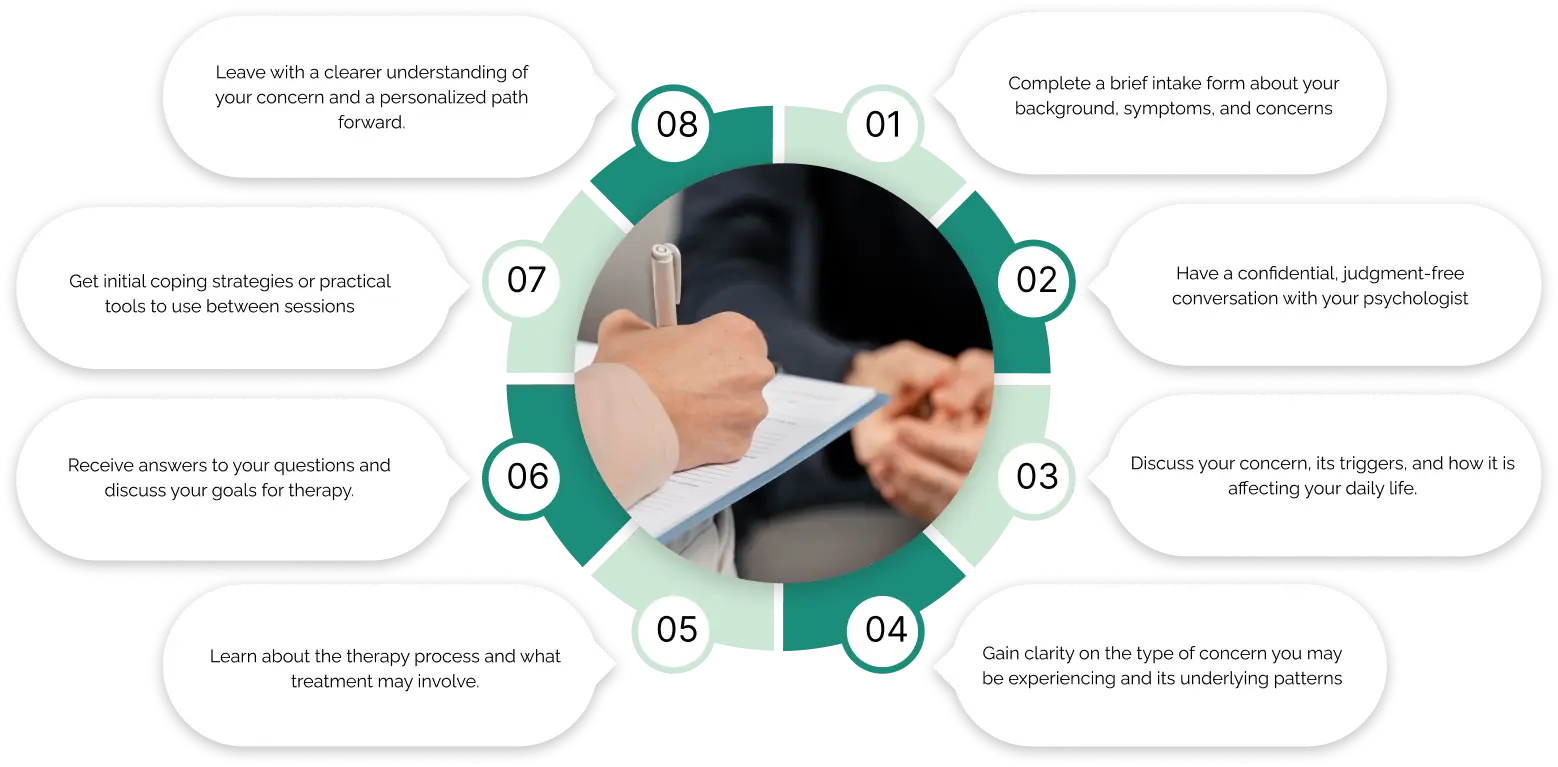
What to Expect in Your First Session for Therapy for OCD ?

Starting Therapy for OCD can feel like a big step, especially if you have never done it before. Here is exactly what happens, so there are no surprises.

After the session, your psychologist may share some initial psychoeducation or simple techniques to try before your next appointment.

Online Therapy for OCD and In-Clinic. Which Is Right for You?

Both mode are clinically effective. Research consistently shows that online therapy produces outcomes equivalent to in-person therapy for your concerns. The best format is simply the one that makes it easiest for you to show up consistently.

In-clinic Therapy for OCD at our Rajendra Nagar centre in Delhi

Book In-Clinic Consultation

Online Therapy for OCD offers access from anywhere across the globe

Book Online Consultation

What Our Clients Say About Therapy for OCD at Kaleidoscope

Frequently Asked Questions About OCD Therapy

The number of sessions varies depending on the type and severity of your OCD, your goals, and how much your symptoms affect daily life. Many people experience meaningful improvement through evidence-based therapies such as ERP and CBT, though the timeline differs for each individual. During your initial sessions, your psychologist will provide a clearer indication based on your individual situation.

While OCD and anxiety do share some common signs, there is an important distinction. Anxiety usually involves ongoing worry about everyday situations or future events. OCD is characterised by unwanted, intrusive thoughts (obsessions) that cause significant distress, along with repetitive behaviours or mental rituals (compulsions) performed to reduce that distress or prevent something feared from happening.

Yes, OCD is one of the manageable mental health conditions. Evidence-based therapies such as Exposure and Response Prevention (ERP) and Cognitive Behavioural Therapy (CBT) have been shown to significantly reduce symptoms for many people. With the right treatment, individuals often experience lasting improvements and continue to benefit from the skills they learn long after the sessions end.

While OCD may not completely disappear, it can be managed very effectively with the right treatment. Therapies such as ERP help many people significantly reduce their symptoms so that OCD no longer has a major impact on their daily lives. Over time, people learn practical skills to manage OCD independently and maintain their progress. The goal of treatment is not perfection, but greater freedom and control over your life.

Our Blog

Get informed and seek the right help in the right direction.

Family Pressure on Students
Mental Health

Family Pressure on Students, How It Affects Mental Health...

Students secretly suffer from anxiety, self-doubt, burnout, and emotional exhaustion owing to the feeling of not being ‘good enough’.

Admin
29 May 2026
Child using a smartphone at night in bed
Heart & cholesterol management

Screen Time and Mental Health in Children: How Much Is Too Much?

Screens are everywhere now. From online classes and cartoons to gaming and YouTube shorts.

Admin
25 May 2026
child psychologist is an expert in studying
Heart & cholesterol management

How to Choose the Right Child Psychologist for Your Child

A child psychologist is an expert in studying and assisting in the development of the emotional, behavioral, and cognitive growth of an individual.

Admin
20 May 2026

Start Your Journey to a Calmer Life Today

Your concerns does not have to be the lens through which you experience everything. With the right support, you can understand what is driving it. It will help to loosen its hold on your decisions and relationships and reclaim a life that is not organised around avoidance and worry.